New Scientific Tests Transform our Understanding of the History of Sudeley Castle
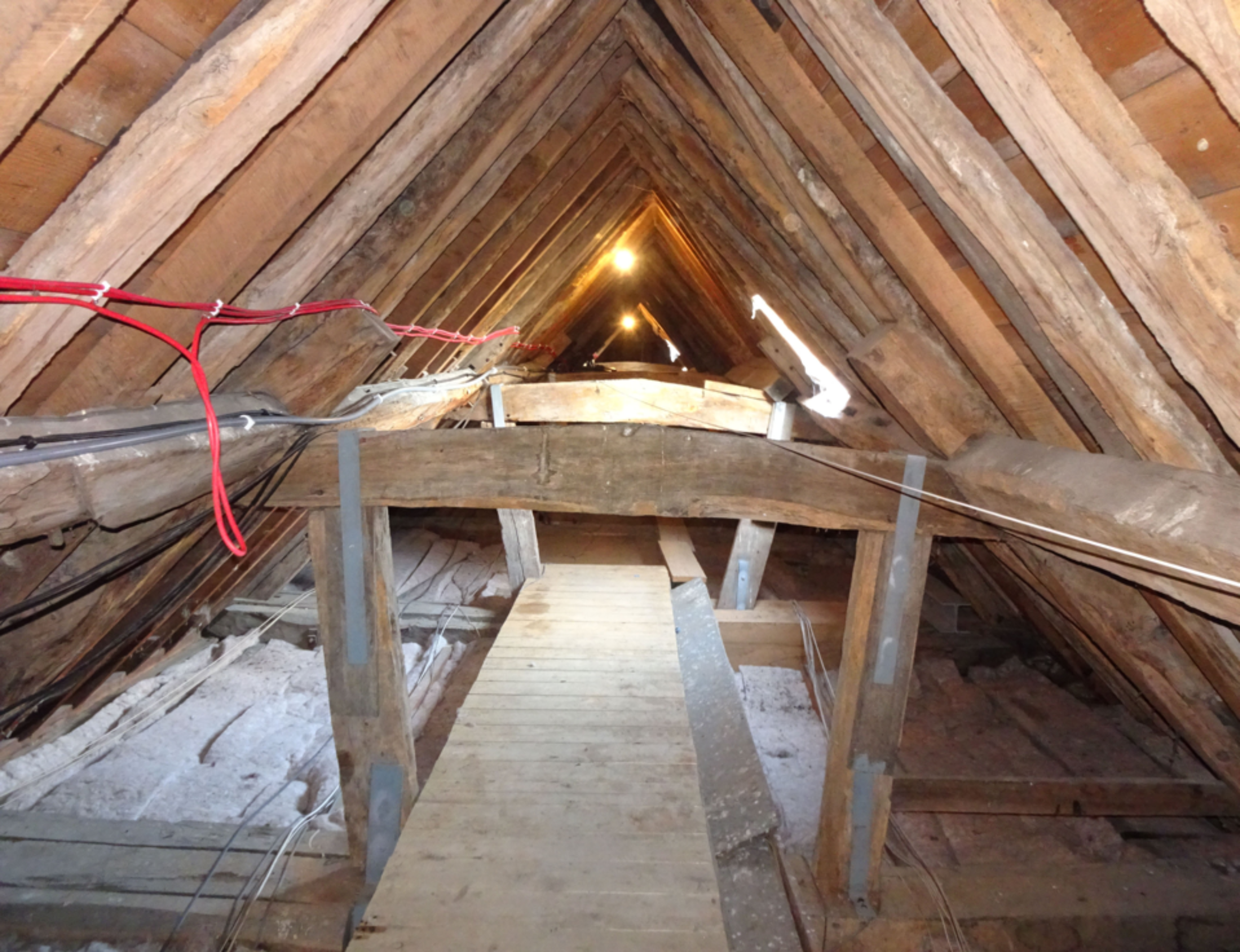
Tree-ring dating (dendrochronology) of the roof timbers at Sudeley Castle, Gloucestershire, funded by the Castle Studies Trust (CST), surveyed by the Gloucestershire Building Recording Group (GBRG) and carried out by dendrochronologist Dr Andy Moir, has shown that part of the North and all of the East and West wings of the original outer courtyard were built between 1569-72.
This result overturns the previous history which indicated that the castle roofs were destroyed during the Civil War and identifies that the roofs were likely built by Edmund Brydges (the 2nd Lord Chandos).
During the English Civil War, Sudeley had been used as the base by both Prince Rupert and Charles I, from where they had launched attacks on Cirencester and preparations had been made to attack Gloucester. Following these failed attempts, Parliamentary troops had successfully besieged the castle on two occasions, bombarding the castle with cannon. After the second siege, the order was given for a systematic slighting thus making the castle un-inhabitable. Roofs were taken off and many walls were razed to the ground.
Details of the destruction became clear when Lady Jane Brydges, widow of George Chandos, tried to sue for recompense. This was shown by depositions in the archives taken from five craftsmen who stated that the castle had been fully destroyed, and this had been signed off by two judges from Gloucester, Edward Slaughter and Robert Megge. However, as the dendrochronology report went on to show, the slighting was not as comprehensive as claimed, and roofs to the East, West and part of the North range of the outer courtyard were still intact.
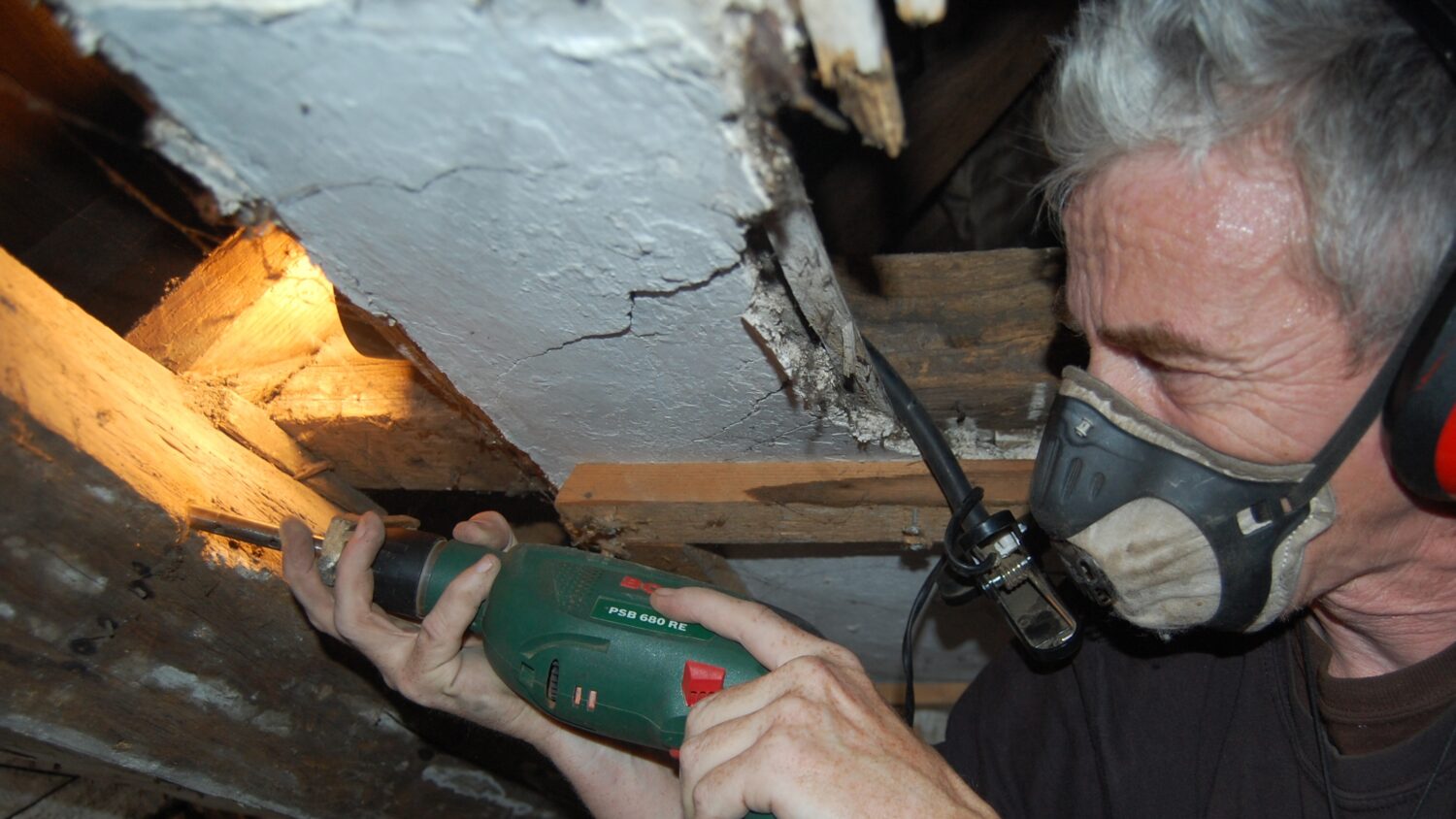
Andy Moir took 30 pencil-like core samples drilled from the castle roofs. Tree-ring series from twenty of these timbers matched together to form a 159-year mean chronology that was dated to span 1413 to 1571. The oldest tree used in construction of the roof started growing in 1413 and the trees were all felled between the spring of 1569 and the winter of 1571/2.
As it was common medieval practice to convert the trees into timbers before they seasoned, construction of the North, East and West range roofs of the outer courtyard likely occurred between 1569 and 1572. To give some idea of the scale of the construction, the North, East and West range roofs are around 38m and 46m, 36m in length, respectively. Yet still the carpenters of the day likely managed to complete this huge construction over just three years.
The dendro-dating took place following a brief visual survey of the west, north and east range roofs of the Outer Courtyard of Sudeley Castle in November 2025 the GBRG. Some of stylistic features of timbers that survive in the roofs are useful to estimating their date of contraction, because date ranges of similar features have been identified in through the GBRG’s previous tree-ring dated projects on buildings in Gloucestershire.
'Dendrochronology is revolutionizing the dating of English castles, replacing historical guesswork with absolute felling dates,' says Dr Andy Moir of Tree-Ring Services. 'This research identifies that construction of the outer courtyard occurred during the Elizabethan zenith of oak timber-framing by expert carpenters.'
'The CST is delighted to have funded this project and yet again advance the understanding of castles and provide yet another example showing that castle slighting did not mean the complete destruction of the castle,' adds Castle Studies Trust Chair of Trustees Jeremy Cunnington.
'This survey has changed our understanding of the history of Sudeley Castle and has led to great interest amongst the family, the staff, guides and volunteers at the Castle,' Derek Maddock, Archivist at Sudeley. 'Research has now indicated that that the roof timbers were intact and dated to the middle years of the reign of Elizabeth I, not as we previously thought, rebuilt towards the end of the 1700’s. It is exciting to think that after all these years there are still discoveries to be made about this wonderful building.'
To see 3D imagery of the roof interiors created during the research by Mark Bletchly follow the links below:
Explore more
There is always something going on at Sudeley…